
Your First Shipment Into a New Country Will Not Go Smoothly
Nobody tells you this at the start, so we will. Your first shipment into a new country will probably not go smoothly. Not because your team is careless, and not because you picked a difficult market. Because a first entry is a genuinely different exercise from every entry that follows it, and most import plans […]
Decommissioned, Not Free to Ship: Exporting Retired AI Hardware
The cluster is decommissioned. The buyer is agreed, the racks are ready to come out, and the shipment cannot lawfully leave the country. Not because anything was done wrong, but because two questions were never asked: is this hardware still controlled, and is your company even eligible to act as the exporter? Both answers surprise […]
EU Battery Regulation for Importers: EPR, Labels and 2027 Passport
If you import battery energy storage, industrial batteries, or hardware with batteries built in, the shipment now has to clear more than customs. The EU Battery Regulation attaches a set of product-compliance and producer duties to those goods, and several of them fall on the importer, not only the overseas manufacturer. The trap is treating […]
The EU Cyber Resilience Act: What Hardware Importers Must Do
You have named your importer of record, cleared customs, and checked the CE marking. For connected hardware entering the EU, that is no longer the whole job. The EU Cyber Resilience Act adds a separate market-access condition, cybersecurity, and it introduces a second kind of importer whose duties are defined by law, not by your […]
How to Import ASIC Miners: The Customs, HS Code and IOR Guide
A pallet of new mining rigs can be worth more than a delivery van full of laptops, and it can sit at the border just as easily. Application-specific integrated circuit (ASIC) miners are high in value, concentrated in origin, and unusually exposed to the two things customs authorities scrutinise most: how the goods are classified […]
1PL to 5PL Explained: The Logistics Tiers and Where the IOR Fits
Every logistics explainer walks you up the same ladder: 1PL, 2PL, 3PL, 4PL, 5PL, more outsourcing at each rung. That part is easy, and most guides stop there. But if you move high-value goods across borders, the ladder leaves out the one question that can create a serious customs problem: when your cargo reaches a […]
How to Protect High-Value Tech Cargo: The Risks That Actually Cost You
There are two ways to lose a high-value shipment. One is dramatic: a truck is hijacked, a container disappears, a pallet of servers is gone. The other is quiet: the goods sit untouched in a bonded warehouse for three weeks because the paperwork was wrong, the importer was not authorised, or customs flagged the valuation. […]
IT Hardware Import Compliance by Country: Rules That Stop Shipments
IT hardware import regulations by country are rarely identical, even when the equipment is the same. The same server, router, or laptop can clear customs smoothly in one country and sit blocked for weeks in another. The hardware is identical. What changes is the regulation waiting for it on the other side of the border. […]
Ship Loaned or No-Sale Equipment to Canada Without CARM Registration
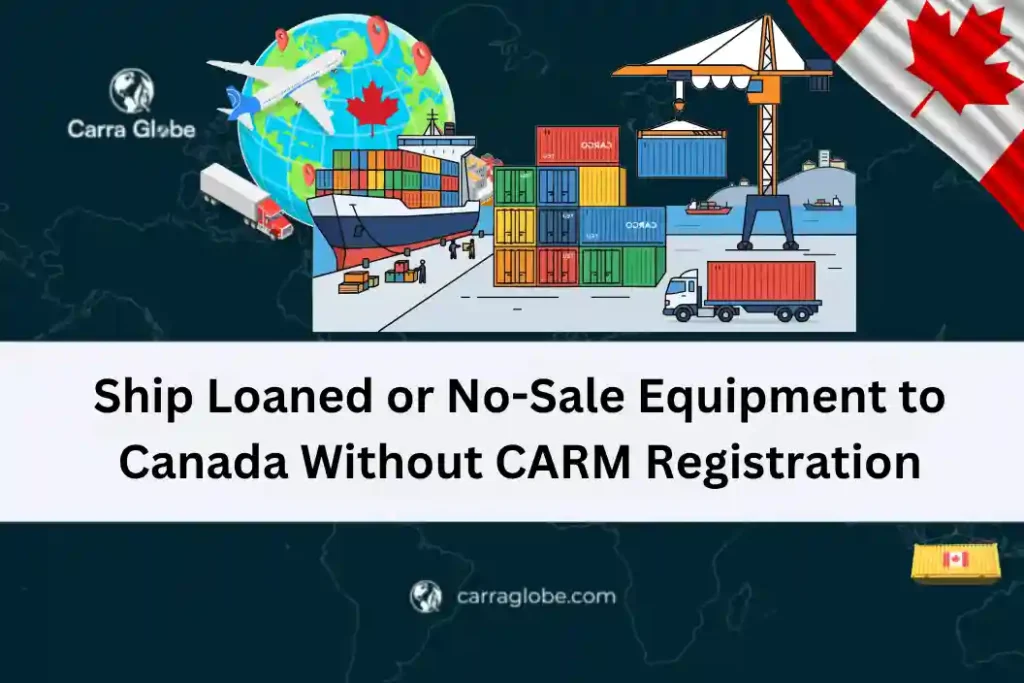
Here is a situation we see constantly. A US or international company needs to send equipment to Canada, laptops on long-term loan to a client’s staff, demo units, tools that stay the company’s property and are never sold. There is no sale, no invoice value changing hands, so it feels like it should be simple. […]
Can AI Replace Your Importer of Record? What It Can and Cannot Do
If you move high-value equipment across borders, servers, GPUs, networking hardware, medical devices, you have almost certainly asked a version of this question in 2026: can an AI tool now handle the import side, so I do not need to pay for an importer of record? It is a fair question, and getting the answer […]