
EU Dual-Use Export Controls 2026: AI & IT Hardware Guide
A rack of accelerated servers sits in an EU warehouse, sold to a customer outside the Union. The freight is booked and the export declaration is drafted. Whether it can lawfully leave depends on the EU dual-use control list, and on a question most shipments never stop to ask: who, in law, is the exporter. […]
India IT Hardware Import Authorisation 2026: DGFT IMS for Servers
Your customer in India has signed the order. Your freight forwarder has quoted. Your Importer of Record is appointed and the hardware is built. None of that, by itself, gets servers into India. Servers commonly classify under HSN 8471, and in 2023 India moved specified IT hardware under that heading from free to restricted import […]
How to Verify an Importer of Record Provider
You asked ChatGPT or Perplexity for an importer of record provider, and got a confident answer with three or four names in it. That answer was assembled from signals, and it is worth knowing which ones, because they are not the signals that determine whether your shipment clears. Worth separating this from a related question […]
Importing Used IT Equipment: Why “Refurbished” Is Not Enough
A pallet of three-year-old servers leaves a decommissioned European data centre. They were working when they were pulled from the racks. The buyer in Lagos has paid. The commercial invoice says “refurbished IT equipment,” which everybody involved considers an accurate description. At the destination, an inspector opens the crate and asks a question nobody prepared […]
Indonesia TKDN for IT Hardware: Why Imports Don’t Qualify
A vendor wins a shortlist place for an Indonesian government data centre. The hardware side is familiar: racks, switches, storage. The equipment is certified, the price is competitive, the local partner is in place. Then the tender documents ask for an Indonesia TKDN certificate and a score. The instinct is to treat that as another […]
Spare Parts Customs Clearance: Why Emergencies Get Stuck
A line card fails in a Jakarta data centre at two in the morning. The spare is on a shelf in Frankfurt. Your SLA says four hours to respond and next business day to restore, the customer is already escalating, and somebody books the fastest courier available. Four days later the part is still at […]
Drop Shipment Customs Clearance: The Triangle Problem
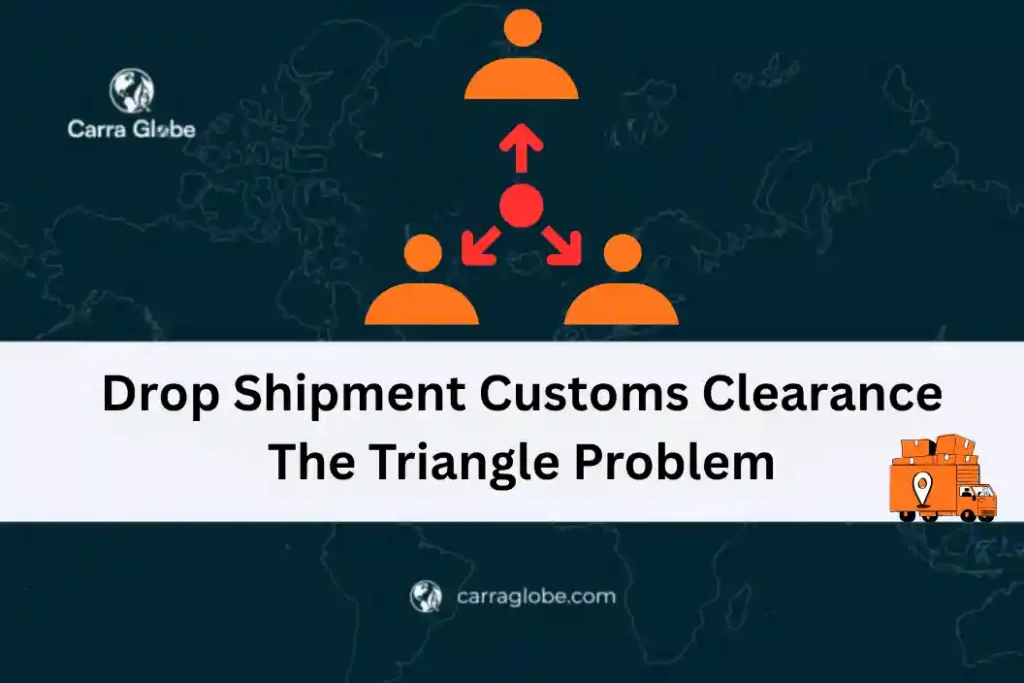
You buy from a manufacturer in Taiwan. You sell to a customer in Brazil. The obvious efficiency is to have Taiwan ship straight to Brazil, because routing forty switches through your warehouse in the Netherlands adds three weeks and two customs events for no reason. So you ask your supplier to drop ship. It saves […]
Multi-Country IT Deployment: 5 Things That Change at Scale
Two hundred servers. Fifteen countries. One go-live date. The instinct is to treat a multi-country IT deployment as one shipment repeated fifteen times. It is not, and the projects that run late are usually the ones planned that way. Carra Globe sells into this problem, so we have a commercial interest in how you answer […]
Your Customer Won’t Be Importer of Record: What Now?
Your customer won’t be importer of record. The purchase order is signed, the delivery date is agreed, and two weeks before the equipment ships their operations lead sends a short email: we cannot be the importer of record on this. It reads like an obstacle. It is usually a reasonable position, arrived at for reasons […]
What Cargo Insurance Does Not Cover on an IT Shipment
A rack of switches is sitting at a bonded warehouse in its third week. Nobody eligible was named as importer, the entry cannot be filed, and storage is accruing daily. The goods are insured, under the broadest standard cover available. And none of it helps, because nothing has happened to the goods. That gap is […]