
Export Controls and Data Centre Hardware: The Global Rules for 2026

A server, a networking switch, or a rack of GPUs crossing a border in 2026 is rarely governed by one country’s rule. It is usually governed by several at once: a multilateral baseline most governments have agreed to, plus whatever additional controls the exporting country, the destination country, and sometimes a third country with a […]
Enterprise IT Hardware Imports: In-House, Forwarder, or Importer of Record?
Most articles about importing enterprise IT hardware in 2026 answer a question you did not ask. They explain that customs is complex and then tell you to hire an importer of record, without ever addressing the decision you are actually trying to make: for this shipment, into this country, do you handle it yourself, hand […]
Reduce Import Duty UAE 2026: The Methods That Cut Your Dubai Customs Bill
The UAE already has one of the lowest tariff regimes in the world, a flat 5% on most goods, yet many businesses importing IT hardware, data centre equipment, and machinery into Dubai and Abu Dhabi still pay more than they need to, or pay duty they could have deferred or avoided entirely. The reason companies […]
Global Importer of Record for Technology OEMs: Why Shipping Your Product Is Different From Deploying It
Almost every guide to importer of record services is written for the same reader: an enterprise rolling out its own hardware into its own offices or data centres. Ship the servers, clear customs, deploy them, done. That reader has a real problem, but it is not your problem. If you are a technology OEM, your […]
Reduce Import Duty Taiwan 2026: The WTO ITA, CCC Classification, Bonded Zones, and the Methods That Cut Your Taiwan Customs Bill
Taiwan sits at the centre of the global technology supply chain, and for most IT hardware its import duty is already 0%. Yet businesses importing servers, networking equipment, and components into Taipei, Hsinchu, and Kaohsiung still overpay, usually because a product that should qualify for zero duty is misclassified, or because the compliance gate is […]
Foreign Test Report Acceptance: Why a Valid Lab Report Can Still Be Rejected

A product is tested in a good laboratory. The report is technically sound, the accreditation is real, the engineering is beyond question. Twelve months later the same report is submitted for approval in a destination market and comes back rejected, not because anything in it is wrong, but because the laboratory that issued it is […]
US De Minimis Exemption Suspended 2026: What Every Importer and E-Commerce Seller Must Do Now
The US de minimis exemption has been suspended. Since August 29, 2025, every commercial shipment entering the United States, regardless of value, regardless of country of origin, and regardless of shipping method, is subject to formal customs entry, 10-digit HTS classification, and full duty payment. The $800 threshold that allowed 1.36 billion packages to enter […]
The Silent Middle: What Actually Happens to Your Hardware Between the Purchase Order and the Rack

A server refresh signed off in March, set for late April, is still half-installed in July. No port strike, no customs seizure, no single failure to blame. The delay hid where hardware projects almost always lose time: the operational stages between the factory and the rack, where the shipment changes hands and no one owns […]
Wrong HS Code on the Invoice: What to Do, Step by Step
You are looking at a commercial invoice and the HS code on it does not match the goods. Maybe it covers similar hardware but not this specific product. Maybe it is the code the supplier always uses regardless of what they ship. Either way, you are about to make a legally binding declaration to customs […]
HS Codes for Electronics and Tech Equipment: The 2026 Field Guide
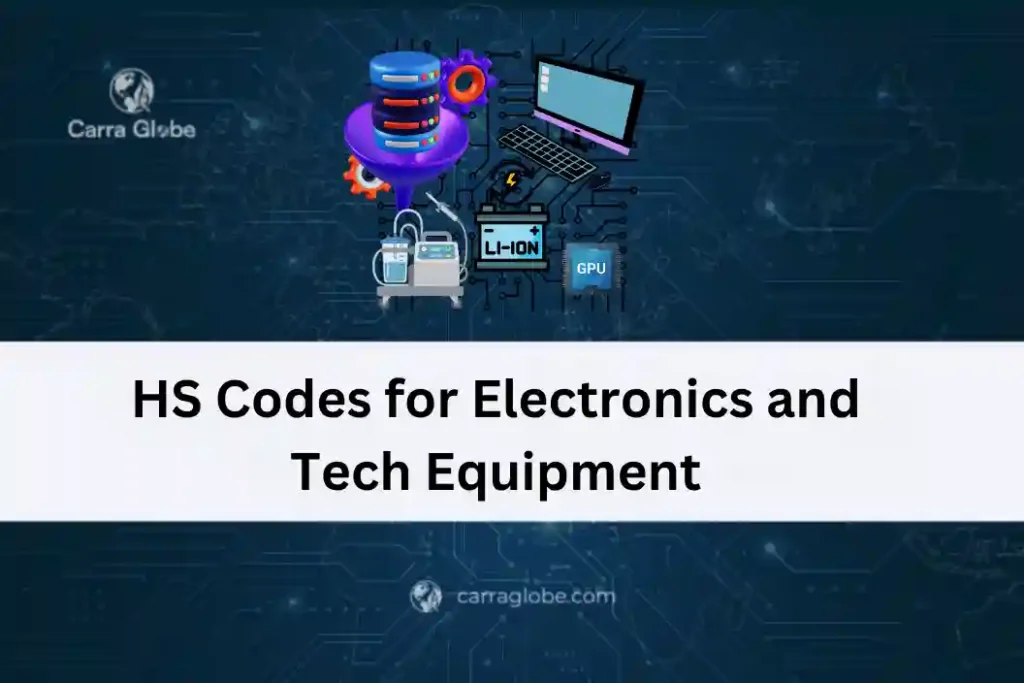
The same GPU can cost three different amounts to import, and nothing about the chip changes. Shipped as a bare component, it enters under one code, duty-free in most major markets. Mounted on a module and presented as a processing unit, it moves to a code that in the US can now carry a 25 […]