
Carra Globe provides Importer of Record (IOR) , Exporter of Record (EOR), and DDP shipping support in the Kingdom of Bahrain for foreign companies without a local presence. We handle Bahrain Customs Affairs clearance, GCC Customs Union documentation, VAT registration and filing with the National Bureau for Revenue (NBR), TRA type approval for telecom equipment, NHRA registration for medical devices, and GSO conformity verification for IT hardware, telecommunications, medical devices, and commercial cargo entering via Khalifa Bin Salman Port, Bahrain International Airport, and King Fahd Causeway. For companies that need to ship to Bahrain without a local entity, Carra Globe provides a complete third-party IOR Bahrain solution covering customs clearance, VAT registration, TRA approvals, and DDP delivery to any Bahraini address.
.
Shipping into a Bahrain free zone or planning re-export? Review Bahrain Free Zone Rules for Tech Equipment Imports before you finalise Incoterms, importer setup, and landed-cost assumptions..

Foreign companies shipping into Bahrain without a local entity need an Importer of Record in Bahrain to legally clear goods, pay duties, and manage regulatory approvals. Carra Globe acts as your IOR handler for everything from customs entry and VAT compliance to TRA and NHRA approvals, so you can ship DDP without setting up a Bahraini company. Whether you need to import IT equipment to Bahrain, clear data centre hardware through Bahrain Customs, or deploy telecom infrastructure requiring TRA type approval, the IOR requirement applies to all commercial goods entering the Kingdom.
Carra Globe supports IT resellers, OEMs, and technology distributors shipping into Bahrain and across the GCC
Usually, yes. Carra Globe acts as importer of record in Bahrain through its in-country importing structure, so a foreign seller, integrator or end user does not need its own registered company there.
Whether a specific shipment can go ahead still depends on the product, its approvals and the parties involved. We check those before the goods leave origin and confirm the route in writing.
| Customs authority | Bahrain Customs Affairs (listed by the US Commercial Guide as the Customs Directorate, Ministry of Interior) |
|---|---|
| Import VAT / GST | 10% since 1 January 2022 (5% from 1 January 2019); administered by the National Bureau for Revenue (PwC Tax Summaries; Trowers & Hamlins) |
| How duty is calculated | 5% of CIF value for most goods; tobacco 100%; goods under the US-Bahrain FTA (in force August 2006) largely duty exempt; goods with documents proving duty paid at the first GCC entry point exempt (US Commercial Guide) |
Checked against official sources on 14 October 2026. Rates and rules change, so confirm the treatment for your exact HS code before shipping.
Companies engage Carra Globe when they need to import into Bahrain without establishing a local entity,or when their product category carries compliance obligations (TRA type approval for telecom equipment, NHRA registration for medical devices, GSO Certificates of Conformity for regulated goods, Halal certification for food and pharmaceutical products) that require a registered Bahraini partner to manage. We also handle VAT registration and quarterly filing with NBR,customs duty optimisation under the GCC Common Customs Tariff, and King Fahd Causeway clearance for Saudi-origin cargo. As a third–party Importer of Record in Bahrain, Carra Globe provides the importer through its in-country importing structure, which is a locally registered entity that takes legal responsibility for customs entry, duty and VAT payment, and regulatory compliance, making Bahrain customs compliance straightforward for foreign shippers from any origin country.
IOR becomes necessary when a foreign company has no registered Bahraini entity; when the consignee cannot act as the legal importer; when DDP Incoterms require one party accountable for all entry costs; when products require TRA type approval, NHRA registration, or a GSO Certificate of Conformity before customs release; or when ongoing VAT registration and NBR filing obligations need to be managed in-country. IOR services also help when you need end-to-end freight forwarding to Bahrain integrated with customs clearance, TRA approvals, and last-mile delivery.
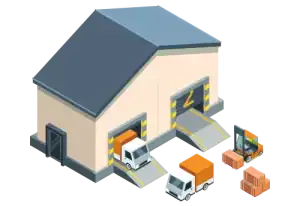
Before any cargo moves, Carra Globe verifies the full compliance picture at product level: CR number and TRN confirmed for customs entry; TRA type approval status and approval number verified for all RF-capable devices; NHRA classification and registration requirements checked; GSO conformity obligations confirmed and testing arranged where needed.
HS code classification validated; declared values reviewed for related-party transactions; Certificate of Origin authenticated; Halal certification coordinated; Arabic labelling verified; IMEI numbers registered with TRA; and import permits secured for restricted categories.
Approvals attach to the exact model and what it does, not to a category name. One product can need more than one.
| Equipment | Approval to check |
|---|---|
| Used or refurbished equipment | Check before shipping. Some markets restrict used IT equipment or add conditions. We confirm the rule for your exact items. |
Bahrain is a member of the GCC Customs Union with Saudi Arabia, the UAE, Kuwait, Oman, and Qatar a common external tariff of 5% on CIF value applies to non-GCC imports, while GCC-origin goods move duty-free with a valid GCC Certificate of Origin. All shipments must be declared through the Bayan electronic system under a valid CR number. Standard documentation includes a commercial invoice (seller, buyer, HS code, declared value, country of origin), packing list, authenticated Certificate of Origin, and Bill of Lading or Airway Bill consigned to the registered Bahraini importer. Customs assigns entries to Green (no exam), Yellow (document review), or Red (physical inspection) channels. Import permits are required for alcohol, pork, firearms, pharmaceuticals, chemicals, and certain agricultural products. Understanding Bahrain import regulations is essential for first-time shippers, as the combination of GCC Customs Union rules, Bayan electronic filing, and product-specific permits creates multiple compliance checkpoints before cargo is released.
Bahrain introduced VAT at 5% on 1 January 2019 and raised the standard rate to 10% from 1 January 2022. Import VAT is assessed at 10% on CIF value plus customs duty, payable at clearance. Businesses with annual taxable supplies above BHD 37,500 (approximately USD 99,500) must register with NBR and obtain a TRN. Returns are filed quarterly, due one month after each quarter closes. Registered businesses can reclaim import VAT as input tax credit. Exports, international transport, and specified financial services are zero-rated; residential real estate, bare land, and local passenger transport are exempt. A reverse charge applies to certain B2B services from non-GCC suppliers. Records must be retained for five years.
TRA type approval is mandatory before import, sale, or use of any equipment that transmits or receives radio signals mobile phones, tablets with cellular connectivity, wireless routers, WiFi access points, Bluetooth devices, RF transmitters, satellite equipment, and IoT devices. Approval requires test reports from ISO 17025 accredited laboratories; CE, FCC, or Innovation Canada certifications can expedite the process. The TRA Type Approval Certificate is valid for five years. IMEI registration with TRA is the importer’s responsibility for all mobile phones, and TRA maintains an active IMEI blacklist devices must be verified clean before shipment. For 2025–2026, 5G devices must meet updated TRA testing standards and IoT devices face enhanced cybersecurity requirements. Processing runs 2–6 weeks.
NHRA regulates medical devices under Decree Law No. 18 of 1997. Class I devices require post-market notification only; Class IIa, IIb, and III require full NHRA Registration Certificate before import. Required documentation includes ISO 13485 certification, CE Mark or FDA 510(k) clearance, ISO 17025 test reports, English and Arabic labelling and IFU, and ISO 14971 risk management documentation.. UDI compliance is increasingly required.All pharmaceuticals require NHRA marketing authorisation (3–12 months); controlled substances require additional Ministry of Interior permits. GDP compliance and pharmacovigilance obligations apply from market entry. Processing: 4–8 weeks for Class IIa; 8–16 weeks for Class IIb/III.
Send us the hardware list. We will come back with the compliance route, the landed cost, and a realistic timeline.
BSMD enforces mandatory GSO technical regulations covering electrical and electronic equipment, toys, cosmetics, food contact materials, automotive parts, textiles, and building materials. Products in these categories require a Certificate of Conformity (CoC) from a GSO-recognised body (such as SGS, Bureau Veritas, Intertek, or TÜV) before customs clearance. Test reports must be from ISO 17025 accredited labs; CoCs are valid for one year. Key standards include GSO 2663 (Low Voltage Equipment), GSO 2452 (EMC), GSO 1943 (Toy Safety), GSO 1694 (Cosmetics), GSO 9 (Food Labeling), and GSO 1016 (Food Additives). The G-Mark is voluntary but increasingly required for consumer electronics. Halal certification is mandatory for food, pharmaceuticals, and cosmetics with animal-derived ingredients.
Most goods from outside the GCC face 5% duty on CIF value. Duty-free treatment applies to GCC-origin goods with a valid Certificate of Origin, goods under Bahrain’s FTAs (including the US-Bahrain FTA and the GCC agreements with Singapore and EFTA states), approved capital equipment for industrial projects, and certain food staples and medicines. Tobacco carries 100% duty plus excise; alcohol is restricted to licensed establishments. The landed cost formula is CIF + 5% duty + 10% VAT on (CIF + duty). Customs processing adds 0.05–0.1% of cargo value. Related-party transactions are subject to Bahrain Customs pricing review, so transfer pricing documentation is recommended. Bahrain import duties in 2026 remain at the standard GCC rate of 5% on CIF value for most goods, with zero duty for GCC-origin products andFTA-covered goods, including most US-origin goods under the US-Bahrain FTA.
Bahrain’s three free zones (Bahrain International Investment Park (BIIP), Bahrain Logistics Zone (BLZ) adjacent to Khalifa Bin Salman Port, and the Bahrain International Airport Free Zone) allow goods to be stored, processed, and re-exported without triggering customs duty or VAT. Duty and VAT become payable only when goods are released into the Bahraini domestic market. BIIP offers 100% foreign ownership and zero corporate tax for manufacturers. BLZ is suited to bonded warehousing and GCC redistribution.
Saudi–manufactured goods cross into Bahrain duty–free with a valid GCC Certificate of Origin. Third-country goods imported into Saudi Arabia regardless of whether Saudi duty was paid and are subject to standard Bahrain duty (5%) and VAT (5%) at the causeway. All commercial cargo must be declared to Bahrain Customs at the entry point. Saudi customs export documentation is required. Goods transiting Bahrain to other GCC states follow TIR or GCC transit procedures.
The product groups below carry extra approvals or checks before they can clear customs in Bahrain.
Servers, storage arrays, and networking equipment generally face 5% duty and 10% VAT. Equipment with RF components (WiFi, Bluetooth, cellular, wireless management) requires TRA type approval. All electronic equipment must meet GSO 2452 (EMC). Intra-company sales require arm's length transfer pricing documentation. Companies looking to import IT equipment to Bahrain or deploy data centre equipment must account for TRA type approval for RF-capable devices, GSO EMC conformity, and VAT-compliant customs clearance, all managed by Carra Globe before cargo departs origin.
NHRA registration or notification is mandatory before import. ISO 13485 certification is required for manufacturers.All devices need English and Arabic labelling and IFU. GDP-compliant cold chain storage and post-market adverse event reporting apply from market entry.
TRA type approval is required for all RF devices. IMEI registration is mandatory for mobile phones and cellular tablets. Encryption-capable devices may require Ministry of Interior permits. 5G equipment must meet TRA's 2025 updated testing standards.
NHRA marketing authorisation is required for all prescription drugs. Controlled substances need Ministry of Interior and Ministry of Health permits. GMP certification is required for manufacturing facilities, stability data for registration,and Arabic labelling and Halal certification where applicable.
Dangerous goods must comply with IMDG and IATA regulations. Safety data sheets are required in English and Arabic. Industrial chemicals may require Supreme Council for Environment registration. Lithium batteries need UN 38.3 test summaries for air shipments.
GSO automotive standards apply to all replacement parts. Tyres must meet GSO 2522 labelling requirements. Safety-critical components (brake pads, airbags, steering parts) require a Certificate of Conformity before clearance.
Halal certification is required for meat, poultry, and products with animal-derived ingredients. Phytosanitary certificates apply to fresh produce, seeds, and plants; veterinary health certificates to meat, dairy, and animal products. Products must have 75% of shelf life remaining at import. Arabic labelling covering ingredients, allergens, nutrition, and storage instructions is mandatory.
Bahrain customs clearance timelines vary by Customs channel assignment, TRA/NHRA approval status, and whether cargo requires specialised permits or GSO conformity verification.
Lead times depend on completeness of documentation, TRA/NHRA approval status, GSO conformity verification, Bahrain Customs inspection assignment, and whether cargo requires specialised permits.
Carra Globe already holds every licence, certification, and approval listed above so your cargo moves without any delay with custom clearance in 1 to 2 business days.
Carra Globe provides IOR, EOR, DDP shipping, VAT registration and compliance, TRA type approval management, NHRA registration support, GSO Certificate of Conformity arrangement, customs clearance, a locally registered importing entity through its in-country importing structure, freight forwarding by air, ocean, and road, King Fahd Causeway clearance, free zone services, Global warehousing, distribution, and white glove delivery and installation in the Kingdom of Bahrain.
Bahrain-bound cargo frequently crosses the King Fahad Causeway from Saudi Arabia, making dual-country IOR coverage essential for GCC deployments. Carra Globe manages IOR services across the full GCC UAE, Kuwait, Qatar, and Oman under one compliance framework.
Our services include DDP shipping to Bahrain with full duty and VAT settlement, Bahrain freight forwarding by air, ocean, and road including King Fahd Causeway land freight from Saudi Arabia, and end-to-end customs clearance coordination at Khalifa Bin Salman Port, Bahrain International Airport, and the causeway border crossing.
Yes. An IOR partner provides the required Bahraini Commercial Registration (CR) number, VAT registration (TRN), manages TRA and NHRA approvals, arranges GSO certificates, files customs entries,and settles customs duty and VAT, allowing you to fulfil DDP terms without a Bahraini company.
The GCC Customs Union harmonises customs procedures across Bahrain, Saudi Arabia, UAE, Kuwait, Oman, and Qatar. Goods originating in one GCC state can enter another duty-free with a valid GCC Certificate of Origin. A common external tariff (typically 5% for most goods) applies to imports from non-GCC countries. This means goods cleared in Saudi Arabia and crossing into Bahrain via King Fahd Causeway may be duty-free if they’re Saudi-made; third-country goods may incur Bahrain duty unless documents prove duty was paid at the first GCC point of entry.
Bahrain introduced VAT at 5% on 1 January 2019 and raised the standard rate to 10% from 1 January 2022. Import VAT is assessed at 10% on CIF value plus customs duty. It must be paid at the time of customs clearance. Businesses registered for VAT can reclaim this as input tax on their quarterly VAT returns. VAT registration is mandatory for businesses with annual taxable supplies exceeding BHD 37,500 (approx. USD 99,500).
All telecommunications and radio frequency equipment requires TRA type approval before import. This includes mobile phones, smartphones, tablets with cellular, wireless routers, WiFi devices, Bluetooth equipment, RF transmitters, satellite equipment, and IoT devices with connectivity. The TRA issues a Type Approval Certificate, valid for 5 years, after reviewing the test reports and technical documentation.
Medical devices are classified as Class I (notification only), Class IIa, IIb, or Class III (full registration required). Class IIa, IIb, and III devices must obtain NHRA Registration Certificate before import. Required documentation includes ISO 13485 certificate, CE Mark or FDA clearance, test reports, Arabic labelling, and risk management documentation. Processing time: 4–8 weeks for Class IIa; 8–16 weeks for Class IIb/III.
GSO (GCC Standardization Organization) sets mandatory technical regulations across all GCC states. Products subject to GSO standards require a Certificate of Conformity (CoC) issued by a GSO-recognised conformity assessment body (e.g., SGS, Bureau Veritas) before Bahrain customs clearance. Regulated categories include electrical equipment, toys, cosmetics, food contact materials, automotive parts, and textiles. Test reports must be from ISO 17025 accredited laboratories. CoC is valid for 1 year.
The King Fahd Causeway is the land border between Bahrain and Saudi Arabia. Goods manufactured in Saudi Arabia can enter Bahrain duty-free with a valid GCC Certificate of Origin. However, goods of third-country origin that were imported to Saudi Arabia are subject to Bahrain VAT (10%) when crossing into Bahrain, and to customs duty (typically 5%) unless documents prove duty was paid at the first GCC point of entry. All commercial cargo must be declared to Bahrain Customs at the causeway entry point.
Goods entering Bahrain through normal customs clearance immediately become subject to customs duty (typically 5%) and VAT (10%). Goods entering Bahrain’s free zones (BIIP, BLZ, Airport Free Zone) are not subject to duty or VAT until they’re released for domestic consumption in Bahrain. Free zones are ideal for re-export operations, regional distribution, or manufacturing for export. Moving goods from free zone to Bahrain mainland triggers duty and VAT payment.
Yes. We support servers, networking equipment, storage arrays, telecom hardware, and full data centre deployments, with TRA type approval verification GSO conformity documentation, VAT-compliant customs clearance, and white glove delivery and installation services at Bahrain locations including Manama Data Center District and BIIP industrial facilities.
Bahrain import duties in 2026 are 5% on CIF value for most non-GCC goods, plus 10% VAT on CIF value plus duty. GCC-origin goods enter duty-free with a valid Certificate of Origin. Additional costs include customs processing fees (0.05–0.1% of cargo value), TRA type approval fees for telecom equipment, and any GSO testing or certification costs. Carra Globe provides complete landed cost estimates before cargo ships.
Yes. Carra Globe provides Bahrain freight forwarding by air, ocean, and road, fully integrated with IOR services, TRA type approval management, NHRA registration, GSO conformity verification, customs clearance, and last-mile delivery across Bahrain including Manama, Muharraq, Riffa, and industrial zones.
Bahrain customs clearance for Green channel entries typically takes same day to 1 business day. Yellow channel (document review) takes 2–5 days. Red channel (physical inspection) takes 6–9 days. Pre-shipment TRA approval, GSO certification, and complete documentation significantly reduce clearance time. Carra Globe’s pre-departure compliance verification helps entries clear on first submission.

Last reviewed: 14 October 2026
Update policy: reviewed every quarter and after major customs, tax or product-rule changes
Corrections: info@carraglobe.com
This page gives general operational information as at 14 October 2026. It is not legal or tax advice. Requirements depend on the exact product and transaction and may change. Customs and regulatory authorities make the final decisions.
We use cookies to improve your experience and analyse site traffic. By accepting, you consent to our use of cookies in line with our Privacy Policy.